
Reflection: Throughout the EDU 520 course I have learned so much about the use of digital media. I have reflected on my own online identity and online presence to determine any changes I wish to make. I have learned how to create my own videos, add them to youtube, and how to embed videos. There were some challenging moments when creating the videos, technical difficulties, that I had to overcome. I feel that what I have learned during this course will not only help me moving forward as a student but will also benefit me, and my students, in the classroom. I am looking forward to continuing to use and develop the skills I have learned during this course to create an online network and a professional online presence.
Group Project: I had the honor and privilege of working with some talented individuals on my first ever wiki project. For this project our professor assigned groups, but the groups worked together to determine the topics and roles of each group member. In my group we were very straight forward and set to work immediately. We each took on a role and then we each picked a topic of focus. As the content locator I was tasked with finding relevant information, resources, and writing the content for our wiki project. My group members did more of the technology aspects: graphics, images, digital media, page layout, etc. We each had to create a multimedia video on our topics to include in our project (my video on Digital Etiquette is below). Our project turned out amazing! You can view the project by clicking on the link. https://sites.google.com/view/april2019group1/home
Content Curation: Stop Lecturing, Start Workshopping
Understanding that we are educating 21st century learners means we need to teach in a 21st century manner. Gone are the days of standing in front of the classroom, notes on the podium, and lecturing to students hoping they will succeed. Transitioning to a workshop model to teach math has it’s benefits for both students and teachers. Erika Gilbert and Cynthia Ciesla explain math workshop, provide a model for implementation, and discuss the benefits of such a model in their article Shift from the Traditional Classroom to a Math Workshop Model (https://www.hmhco.com/blog/shifting-from-a-traditional-math-classroom-to-a-math-workshop-structure ). In the article Gilbert and Ciesla state, “This framework allows students to really investigate mathematical concepts and develop a deeper conceptual understanding, problem solve, and learn with their peers” (2019, par. 9). The math workshop model is something I have implemented in my own classroom and I find it beneficial for students and myself.

Digital Citizenship
What does digital citizenship mean? To me it means following the golden rule when online or using any form of technology. This week I have learned about online privacy, being a responsible user of technology, and online etiquette. As technology users we determine what we keep private and share online. Privacy is in our hands, we decide what information is shared whether directly or indirectly. When it comes to what you share online it sounds fairly simple, but it’s more complicated that one might think. A good rule of thumb would be if you wouldn’t say/share it face to face then you probably shouldn’t do it online either. Through my research this week I have found many tips or lists of online etiquette that reflect digital citizenship. Two sources that I have found to be helpful are: Ten Basic Rules of Netiquette or Internet Etiquette and 7 Rules of Online Etiquette (links provided below). Both sources list and explain the importance of appropriate online behavior. Elizabeth Hartney states, “Name calling, cursing, expressing deliberately offensive opinions — if you wouldn’t do it to the face of anyone who might conceivably see what you write, don’t write it” (2019, par. 5). In 7 Rules of Online Etiquette one rule states, ” Be aware of strong language, all caps, and exclamation points. It is easy for written text to be misread and misunderstood ” (par. 3). These resources and discussions with my peers have helped me develop my digital citizenship statement.
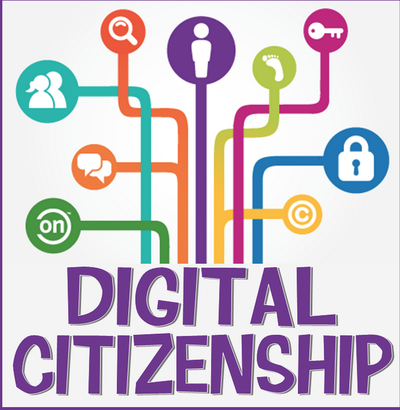
I am dedicated to developing responsible, ethical, and appropriate digital citizens. Students will learn to use technology appropriately and to have respectful digital interactions with others. I will support learners growth and development of digital citizenship through positive lessons, discussions, and experiences. Students will learn to use technology safely, effectively, and respectfully to become model digital citizens.

References:
7 Rules for Online Etiquette. Retrieved from: https://achievevirtual.org/7-rules-for-online-etiquette/Hartney, Elizabeth. (2019).
Ten Basic Rules of Netiquette or Internet Etiquette. Retrieved from: https://www.verywellmind.com/ten-rules-of-netiquette-22285
Work Samples:
Other work samples can be viewed on my blog: Digital Multimedia Presentation, and my Digital Citizenship statement.
 Mrs. Jackson